|
|
|
|
|
|
|
|

|
Don't Miss Any Special Deals - Sign Up To Our Newsletter!
| ||||||||||||||||
| CLICK HERE FOR A FULL LIST OF ALL IVAN BERRYMAN PRINTS BY TITLE |
|


Flight Lieutenant Ray Harrington
Ray joined the RAF in 1941, completing his training in South Africa. In January 1944 he was posted to 603 Squadron flying Beaufighters in North Africa. Here he teamed up with navigator, Warrant Officer A.E. 'Bert' Winwood, and from where they launched attacks across the Mediterranean into Crete, Greece and the Aegean Islands against shipping, harbour installations and enemy aircraft with much success. In December 1944 they were posted to 235 Squadron Coastal Command, part of the Banff Strike Wing, converting to Mosquitos. In April 1945 they were shot down following a strike in the Kattegat, but avoided capture and with the help of the Danish resistance made it home, where they continued to fly again from Banff.


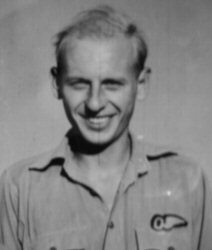
| Flight Lieutenant Ray Harrington - Signed Aviation Art Prints, Paintings and Drawings Pilot and Aircrew Signatures |
|
|
|
|
|
|
|
|
| Text for the above items : |
The Mosquito's Sting by Ivan Berryman. Banff Mosquito H of 404 Squadron flown on its first operational mission by Flying Officer A Catrano and Flight Lieutenant A E Foord spots a German Blohm and Voss Bv138 anchored off Kjevik. They attacked the Bv138 which blew up before going on to attack a Heinkel He115 floatplane which was in the vicinity. This drawing shows the Mosquito beginning its attack on the Bv138. |
Seastrike by Ivan Berryman. Without doubt one of the most outstanding and versatile aircraft in the Allied inventory during World War II, the Bristol Beaufighter was to endure a cautious reception by its crews when it first entered service, not least due to difficulties experienced by crews attempting to abandon a stricken aircraft in an emergency. Its performance and hard-hitting potential quickly overcame such doubts, however, and it went on to earn a commendable reputation - and the nickname Whispering Death. Here, two 254 Sqn TF. MkXs attack a captured Norwegian vessel in 1945. |
Half-Salvo by Ivan Berryman. A Bristol Beaufighter of No.248 Sqn, Banff Strike Wing, fires off a half-salvo of four rockets. |
Shell House Raiders by Ivan Berryman. Tucked in tight en route to Copenhagen, a wave of Mosquito FB VIs of 21 Sqn and their Mustang Mk.III escorts of 126 Sqn (including top Ace Agorastos John Plagis - 16 victories, on his last mission of the war) approach the Jutland Peninsula after a bumpy crossing of the North Sea on the morning of 21st March 1945. The Mosquitoes went on to carry out one of the most daring and successful raids of the Second World War on the German Gestapo headquarters in the centre of Copenhagen, inflicting irreparable damage to the Shellhus and killing more than 150 Gestapo personnel. |
Prowler's Return by Ivan Berryman. Rocket rails empty, Mosquito FB.VI RS619 (LA-F) of 235 Sqn races home low and fast after another successful anti-shipping strike in the Fjords of Norway. On a subsequent mission on 5th April 1945, this aircraft crash-landed in Denmark after suffering a glycol leak. Its crew, Ray Harrington and Bert Winwood, managed to get back home to the UK with the help of the Danish Resistance. |
Night Raiders by Ivan Berryman. A pair of de Havilland Mosquito NF. MkII night fighters of 23 Squadron, based at Bradwell Bay, Essex in 1942. |
Knockout Blow by Ivan Berryman. Banff Mosquito H of 404 Squadron flown on its first operational mission by Flying Officer A Catrano and Flight Lieutenant A E Foord spots a German Blohm and Voss Bv138 anchored off Kjevik. They attacked the Bv138 which blew up before going on to attack a Heinkel He115 floatplane which was in the vicinity. This drawing shows the Mosquito making its attack on the Heinkel as the Bv138 explodes in the distance. |
HMS Valiant and HMS Phoebe at Alexandria, 1941 by Ivan Berryman. A pair of 272 Squadron Bristol Beaufighters roar over the extensively rebuilt battleship HMS Valiant as she lies at anchor at Alexandria late in 1941, accompanied by the cruiser HMS Phoebe and Valiants sister ship HMS Queen Elizabeth (in the extreme distance) |
| Flight Lieutenant Ray Harrington Aircraft details |
 Beaufighter Manufacturer : Bristol Built : 5564 | Beaufighter BRISTOL BEAUFIGHTER The Bristol Beaufighter was a Torpedo Bomber and had a crew of two. with a maximum speed of 330mph and a ceiling of 29,000 feet. maximum normal range of 1500 miles but could be extended to 1750 miles. The Bristol Beaufighter carried four 20mm cannon in the belly of the aircraft and upto six .303in browning machine guns in the wings. it could also carry eight 3 -inch rockets, 1605 lb torpedo or a bomb load of 1,000 lb. The Bristol Beaufighter first flew in July 1939 and with some modifications entered service with the Royal Air Force in July 1940. In the winter of 1940 - 1941 the Beaufighter was used as a night fighter. and in March 1941 the aircraft was used at Coastal Command as a long range strike aircraft. and in 1941, the Beaufighter arrived in North Africa and used as a forward ground attack aircraft. The Bristol Beaufighter was used also in India, Burma and Australia. A total of 5,564 Beaufighters were built until production in Britain finished in 1945, but a further 364 were built in Australia for the Australian Air Force |
 Mosquito Manufacturer : De Havilland Built : 7781 | Mosquito Used as a night fighter, fighter bomber, bomber and Photo-reconnaissance, with a crew of two, Maximum speed was 425 mph, at 30,300 feet, 380mph at 17,000ft. and a ceiling of 36,000feet, maximum range 3,500 miles. the Mosquito was armed with four 20mm Hospano cannon in belly and four .303 inch browning machine guns in nose. Coastal strike aircraft had eight 3-inch Rockets under the wings, and one 57mm shell gun in belly. The Mossie at it was known made its first flight on 25th November 1940, and the mosquito made its first operational flight for the Royal Air Force as a reconnaissance unit based at Benson. In early 1942, a modified version (mark II) operated as a night fighter with 157 and 23 squadron's. In April 1943 the first De Haviland Mosquito saw service in the Far east and in 1944 The Mosquito was used at Coastal Command in its strike wings. Bomber Commands offensive against Germany saw many Mosquitos, used as photo Reconnaissance aircraft, Fighter Escorts, and Path Finders. The Mosquito stayed in service with the Royal Air Force until 1955. and a total of 7781 mosquito's were built. |
| Flight Lieutenant Ray Harrington Squadron details |
No.235 Sqn RAF Country : UK Disbanded 10th July 1945 Known Codes : , LA, VV, | No.235 Sqn RAF Jaculamur humi - We strike them to the ground |
No.603 Sqn RAF Country : UK Disbanded 10th March 1957 Known Codes : , XT, RL, | No.603 Sqn RAF City of Edinburgh (Auxiliary) Gin ye daur - If you dare |
|
Contact Details |
|
Sign Up To Our Newsletter!
This website is owned by Cranston Fine Arts. Torwood House, Torwoodhill Road, Rhu, Helensburgh, Scotland, G848LE Contact: Tel: (+44) (0) 1436 820269. Email: cranstonorders -at- outlook.com |
 |


