|
|
|
|
|
|
|
|

|
Don't Miss Any Special Deals - Sign Up To Our Newsletter!
| ||||||||||||||||
| CLICK HERE FOR A FULL LIST OF ALL IVAN BERRYMAN PRINTS BY TITLE |
|

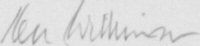
Flying Officer Ken Wilkinson
Battle of Britain pilot flying Hurricanes, he flew Spitfires with 611 Sqn and then 616 Sqn at Kirton-in-Lindsey and 19 Sqn at Fowlmere during 1940 and after a spell instructing returned to operations on Spitfires, with 234 and 165 Squadrons. After spending time with 53, 24 and 10 Operational Training Units, he left the RAF in November 1945 and served in the RAFVR.
Ken said :
From 1st September 1939 I wrote myself off. I thought, 'you've got no chance' lasting through whatever is going to be. It was quite obvious, in the way the Germans were moving, they were going to make a hell of a war out of it, so I was ready for war. I can remember saying 'we've got to stop this fellow Hitler'. When you think of all the thousands of citizens that were being killed by this absurd bombing. They had to pay for it didn't they. Yes, we lost people. Friends that didn't come back. I don't think we were the sort of people to brood over it, ever. You have to get into an attitude to make sure that you're as cold as a fish. Once someone has failed to return, that's it. Fortune smiled on me and not on some of the others. I can only say that whoever it was who popped off at me, wasn't a very good marksman. It transpired that we were doing something far more important than we thought. As far as we were concerned, it was just that there were some untidy creatures from over the other side of the channel, trying to bomb England and the United Kingdom. And we didn't want them to bomb us. After all, we never asked the Germans to start this nonsense, did we? But they did, and we had to stop them, and we did. It's our country. You die for you country.
|
|
|
|
| Flying Officer Ken Wilkinson - Signed Aviation Art Prints, Paintings and Drawings Pilot and Aircrew Signatures |
|
|
|
|
|
|
|
|
| Text for the above items : |
The Fledgling by Ivan Berryman. Under the watchful eye of his more experienced tutor a trainee pilot gets his first taste of the Spitfire Mk.IIa, airborne from Tangmere early in 1941. The nearest aircraft is P7856 (YT-C) which enjoyed a long career, surviving until 1945. |
Spitfire F Mk21 by Ivan Berryman. Pushing the concept of the Spitfire almost to the limit, the sleek F Mk212 represented the ultimate in fighter design at the end of the Second World War. Powered by the mighty Griffon 61 engine driving a five blade propeller, its armament consisted of four 20mm British Hispano Cannon, two in each wing. This example is LA200 (DL-E) of 91 Sqn in 1945. |
Tribute to Air Vice Marshal James Edgar 'Johnnie' Johnson by Ivan Berryman. Pictured above the beaches of Normandy shortly after D-Day in June 1944, Spitfire Mk IX MK392 was the personal aircraft of Wing Commander Johnnie Johnson, carrying his initials JE-J instead of the usual squadron codes. He went on to become Britain's highest scoring ace against the Luftwaffe with 34 claimed victories with many other probable victories. |
High Patrol by Ivan Berryman. Hawker Hurricane Mk 1s of No 242 Sqn patrol a glorious September sky as the Battle of Britain reaches its climax in the Summer of 1940. The nearest aircraft is that of Sqn Ldr Douglas Bader, flying V7467 in which he claimed four victories, plus two probables and one destroyed. P/O W L McKnight (LE-A) and P/O D W Crowley-Milling (LE-M) are in close attendance. |
Ground Force by Ivan Berryman. Routine, though essential, maintenance is carried out on a 501 Sqn Hurricane at the height of the Battle of Britain during the Summer of 1940. Hurricane P3059 SD-N in the background is the aircraft of Group Captain Byron Duckenfield. |
Hurricane Mk.IIC by Ivan Berryman. Hurricane Mk.IIC Z3971 of 253 Sqn, closing on a Heinkel 111. |
A Day for Heroes by Ivan Berryman. The afternoon of 25th July 1940 was a desperate one for the already exhausted fighter pilots of the RAF defending the South coast of England. As convoy CW8 made its way through the English Channel, sixty JU.87 Stukas and forty JU.88 bombers launched a brutal attack on the ships below, backed up by fighter cover of over 50 Messerscmitt Bf.109s. Eight Spitfires of 64 Sqn (Kenley) were scrambled, together with twelve Spitfires of 54 Sqn (Hornchurch) and Hurricanes of 111 Sqn from Croydon. The British pilots found themselves massively outnumbered, but nevertheless put up a spirited fight against the teeming enemy. This painting shows Spitfires of 54 Sqn entering the fray, the pilots scattering as they choose their targets and go after the JU.87s. To the right of this, Bf.109Es of JG.26 are roaring in to join battle, whilst Adolf Galland's aircraft engages a Hurricane of 111 Sqn. |
Tribute to Pilot Officer Ted Shipman by Ivan Berryman. Flying as Leader of B Flight, 41 Sqn, on 15th August 1940, Pilot Officer Ted Shipman and the rest of his flight found themselves among a mass of Messerschmitt Bf.110s that had been detailed to escort a bomber force of Heinkel He111s on a raid on the North of England. Having made one head-on attack on one of the Bf.110s, Shipman manoeuvred his Spitfire Mk.1 onto the tail of another and fired a long burst into it. This was M8+CH of Oberleutnant Hans-Ulrich Kettling of 1./ZG76 and rear Gunner / Radio Operator O/ Gefr Volk, whose starboard engine burst into flames and disappeared into the dense cloudbase. Shipman claimed this initially as a probable, but it was later confirmed as a victory when the aircraft was found to have crash landed at Streatham Nr Barnard Castle. Spitfire K9805 (EB-L) is depicted breaking off the attack as Kettling's stricken Bf.110 begins to burn. Ted Shipman would go on to serve with the Royal Air Force until December 1959 retiring as a Wing Commander. Ted would also go onto become friends with Hans-Ulrich Kettling, the pilot he shot down. |
| Flying Officer Ken Wilkinson Aircraft details |
 Hurricane Manufacturer : Hawker Built : 14533 | Hurricane Royal Air Force Fighter, the Hawker Hurricane had a top speed of 320mph, at 18,200 feet and 340mph at 17,500, ceiling of 34,200 and a range of 935 miles. The Hurricane was armed with eight fixed wing mounted .303 browning machine guns in the Mark I and twelve .303 browning's in the MKIIB in the Hurricane MKIIC it had four 20mm cannon. All time classic fighter the Hurricane was designed in 1933-1934, the first prototype flew in June 1936 and a contract for 600 for the Royal Air Force was placed. The first production model flew ion the 12th October 1937 and 111 squadron of the Royal Air Force received the first Hurricanes in January 1938. By the outbreak of World war two the Royal Air Force had 18 operational squadrons of Hurricanes. During the Battle of Britain a total of 1715 Hurricanes took part, (which was more than the rest of the aircraft of the Royal air force put together) and almost 75% of the Victories during the Battle of Britain went to hurricane pilots. The Hawker Hurricane was used in all theatres during World war two, and in many roles. in total 14,533 Hurricanes were built. |
| Flying Officer Ken Wilkinson Squadron details |
|
Contact Details |
|
Sign Up To Our Newsletter!
This website is owned by Cranston Fine Arts. Torwood House, Torwoodhill Road, Rhu, Helensburgh, Scotland, G848LE Contact: Tel: (+44) (0) 1436 820269. Email: cranstonorders -at- outlook.com |
 |


