|
|
|
|
|
|
|
|

|
Don't Miss Any Special Deals - Sign Up To Our Newsletter!
| ||||||||||||||||
| CLICK HERE FOR A FULL LIST OF ALL IVAN BERRYMAN PRINTS BY TITLE |
|
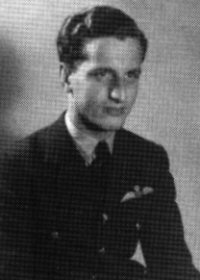

Flying Officer Kurt Taussig
Czech Kurt was sent, age 15, by his parents on the Kindertrnsport to England from Czechoslovakia in June 1939 to escape the Nazi persecution of the Jews. Determined to fight the Germans he joined the RAF at eighteen in late 1942, and after training was posted to the Middle East to join 225 Squadron flying Spitfires on photo-reconnaissance duties in Tunisia, the Sicily landings, and in Italy. He died on 19th September 2019.
| Flying Officer Kurt Taussig - Signed Aviation Art Prints, Paintings and Drawings Pilot and Aircrew Signatures |
|
|
|
|
|
|
|
|
| Text for the above items : |
Return of the Heroes by Ivan Berryman. Spitfire of 610 Squadron which has been damaged during combat during the height of the Battle of Britain is shown over the white cliffs of Dover. No. 610 (County of Chester) Squadron of the Royal Auxiliary Air Force's first major combat with the Luftwaffe was on 27th May when a Heinkel bomber protected by about 40 Me110s, was engaged. The combat which followed saw the Heinkel and three Me110 fighters being shot down. Throughout August 610 Squadron was involved in bitter fighting over the Channel and Home Counties of England. During the Battle of Britain No.610 Squadron operated from Biggin Hill, Hawkinge, and, on one occasion, from Croydon. The Squadron put up a terrific show and 40 enemy aircraft were confirmed as having been destroyed by 610 Squadron during August. The loss to the Squadron was eleven pilots killed during the battle. |
Hurricane Mk.IIC by Ivan Berryman. Hurricane Mk.IIC Z3971 of 253 Sqn, closing on a Heinkel 111. |
Spitfire F Mk21 by Ivan Berryman. Pushing the concept of the Spitfire almost to the limit, the sleek F Mk212 represented the ultimate in fighter design at the end of the Second World War. Powered by the mighty Griffon 61 engine driving a five blade propeller, its armament consisted of four 20mm British Hispano Cannon, two in each wing. This example is LA200 (DL-E) of 91 Sqn in 1945. |
The Fledgling by Ivan Berryman. Under the watchful eye of his more experienced tutor a trainee pilot gets his first taste of the Spitfire Mk.IIa, airborne from Tangmere early in 1941. The nearest aircraft is P7856 (YT-C) which enjoyed a long career, surviving until 1945. |
Spitfire Alley by Ivan Berryman. A pair of Spitfire Mk.IXs of 402 Squadron Royal Canadian Air Force, based at Kenley, practise combat manoeuvres in the skies above Kent in May, 1943. |
In the Playground of the Gods by Ivan Berryman. A lone Royal Air Force Spitfire is shown high amongst the clouds over the southern counties of England during the hieght of the Battle of Britain. |
Spitfire Mk.IXE by Ivan Berryman. A pair of Spitfire Mk.IXEs of 611 Squadron make their way home from a patrol during the summer of 1942. At this time 611 Squadron were based at Kenley and were the first squadron to receive the new Mk.IX putting it on equal terms, for the first time, with the formidable Focke-Wulf 190. |
Give Us Spitfires by Ivan Berryman. A solo spitfire flies through the clouds over southern England. |
| Flying Officer Kurt Taussig Aircraft details |
 Spitfire Manufacturer : Supermarine Built : 20351 | Spitfire Royal Air Force fighter aircraft, maximum speed for mark I Supermarine Spitfire, 362mph up to The Seafire 47 with a top speed of 452mph. maximum ceiling for Mk I 34,000feet up to 44,500 for the mark XIV. Maximum range for MK I 575 miles . up to 1475 miles for the Seafire 47. Armament for the various Marks of Spitfire. for MK I, and II . eight fixed .303 browning Machine guns, for MKs V-IX and XVI two 20mm Hispano cannons and four .303 browning machine guns. and on later Marks, six to eight Rockets under the wings or a maximum bomb load of 1,000 lbs. Designed by R J Mitchell, The proto type Spitfire first flew on the 5th March 1936. and entered service with the Royal Air Force in August 1938, with 19 squadron based and RAF Duxford. by the outbreak of World war two, there were twelve squadrons with a total of 187 spitfires, with another 83 in store. Between 1939 and 1945, a large variety of modifications and developments produced a variety of MK,s from I to XVI. The mark II came into service in late 1940, and in March 1941, the Mk,V came into service. To counter the Improvements in fighters of the Luftwaffe especially the FW190, the MK,XII was introduced with its Griffin engine. The Fleet Air Arm used the Mk,I and II and were named Seafires. By the end of production in 1948 a total of 20,351 spitfires had been made and 2408 Seafires. The most produced variant was the Spitfire Mark V, with a total of 6479 spitfires produced. The Royal Air Force kept Spitfires in front line use until April 1954. |
| Flying Officer Kurt Taussig Squadron details |
|
Contact Details |
|
Sign Up To Our Newsletter!
This website is owned by Cranston Fine Arts. Torwood House, Torwoodhill Road, Rhu, Helensburgh, Scotland, G848LE Contact: Tel: (+44) (0) 1436 820269. Email: cranstonorders -at- outlook.com |
 |


