|
|
|
|
|
|
|
|

|
Don't Miss Any Special Deals - Sign Up To Our Newsletter!
| ||||||||||||||||
| CLICK HERE FOR A FULL LIST OF ALL IVAN BERRYMAN PRINTS BY TITLE |
|
 | Ace with 29.00 Victories |

 | | |  |
| Distinguished Flying Cross | Bar to the Distinguished Flying Cross | Two Bars to the Distinguished Flying Cross | Distinguished Service Order |
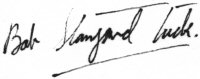
| Wing Commander Bob Stanford Tuck DSO DFC** - Signed Aviation Art Prints, Paintings and Drawings Pilot and Aircrew Signatures |
|
|
|
|
|
|
|
|
|
|
| Text for the above items : |
501 Squadron Hurricanes by Ivan Berryman. Group Captain Byron Duckenfield on patrol in Hurricane P3059 of No.501 Squadron during the Battle of Britain. |
Close Encounter by Ivan Berryman. Supermarine Spitfire Mk.1As of No.610 (County of Chester) Sqn RAAF, intercept incoming Heinkel 111H-16s of the 9th Staffel, Kampfgeschwader 53 Legion Condor during the big daylight raids on London of August and September 1940 - the climax of the Battle of Britain. Spitfire N3029 (DW-K) was shot down by a Bf109 on the 5th of September 1940 and crash-landed near Gravesend, Kent, thankfully without injury to Sgt Willcocks, the pilot. For the record, N3029 was rebuilt and, following some brief flying in the UK, was sent overseas by convoy to the Middle East. Ironically, the ship carrying this aircraft was torpedoed en route and both ship and all its cargo were lost. |
3 Squadron Hurricanes by Ivan Berryman. Hurricanes of No.3 Squadron on patrol. MkIIc variants, characterised by the four Hispano or Oerlikon cannon housed in the wings. No 3 Sqn were engaged in night fighter activities during the Spring of 1941. |
A Welcome Shore by Ivan Berryman. Hurricane LK-M of No.87 Squadron piloted by Flt Lt Alex Thom DFC limps over the south coast of England on 19th August 1942. While supporting troops on the ground at Dieppe, the Hurricane was hit by ground fire and lost oil pressure. Alex Thom got the damaged aircraft back to Britain, making a forced landing at East Den. Ferried back to 87 Sqns airfield, he immediately set off once more for Dieppe in Hurricane LK-A. |
Close Combat by Ivan Berryman. Whilst flying with A Flight of 85 Squadron on 30th July 1940, Geoffrey Allard encountered a pair of Messerschmitt Bf.110s about 40 miles from the coast, apparently patrolling near a convoy. After Squadron Leader Townsend, flying Red 1, had made two unsuccessful attacks, Allard closed to 150 yards and began to fire continuously, eventually closing to just 25 yards, whereupon the starboard engine of the Bf.110 began to disintegrate. This was just one of eight victories that Allard claimed during the Battle of Britain to add to a previous eight that he had scored flying Hurricanes during the Battle of France. |
Straggler's End by Ivan Berryman. Byron Duckenfield is recorded as having shot down a Stuka near Dover, but the exact circumstances are not clear. 501 Sqn did encounter Stukas in this area on a number of occasions - depicted here is a 501 Sqn Hurricane on the tail of a Ju.87. |
Guardian Angels by Ivan Berryman. Flt Lt Alex Thom in his Spitfire MkVc LK-P of 87 Squadron escorting a convoy with his wingman. |
Hurricane Mk.IIC by Ivan Berryman. Hurricane Mk.IIC Z3971 of 253 Sqn, closing on a Heinkel 111. |
Desperate Measures by Ivan Berryman. Having already registered two victories since his arrival at 501 Sqn in the Autumn of 1940, Plt Off K W Mackenzie found himself again in action against some Messerschmitt Bf.109s on 7th October, sharing in the destruction of one before vigorously pursuing another as it turned to head out across the Channel. With his ammunition exhausted, Mackenzie was determined not to let the interloper escape and placed his Hurricane's starboard wing over the tail of the Bf.109, bringing it violently down and severing the tail of the German fighter which plunged uncontrollably into the sea. With his own wingtip missing from the impact and his engine now damaged by rounds from other pursuing German aircraft, Mackenzie limped his crippled Hurricane over the cliffs near Folkestone, where he crash-landed. He survived the incident, albeit with some facial injuries sustained when he was thrown against the gunsight, and was awarded the DFC for his gallantry. |
Ground Force by Ivan Berryman. Routine, though essential, maintenance is carried out on a 501 Sqn Hurricane at the height of the Battle of Britain during the Summer of 1940. Hurricane P3059 SD-N in the background is the aircraft of Group Captain Byron Duckenfield. |
| Wing Commander Bob Stanford Tuck DSO DFC** Aircraft details |
 Hurricane Manufacturer : Hawker Built : 14533 | Hurricane Royal Air Force Fighter, the Hawker Hurricane had a top speed of 320mph, at 18,200 feet and 340mph at 17,500, ceiling of 34,200 and a range of 935 miles. The Hurricane was armed with eight fixed wing mounted .303 browning machine guns in the Mark I and twelve .303 browning's in the MKIIB in the Hurricane MKIIC it had four 20mm cannon. All time classic fighter the Hurricane was designed in 1933-1934, the first prototype flew in June 1936 and a contract for 600 for the Royal Air Force was placed. The first production model flew ion the 12th October 1937 and 111 squadron of the Royal Air Force received the first Hurricanes in January 1938. By the outbreak of World war two the Royal Air Force had 18 operational squadrons of Hurricanes. During the Battle of Britain a total of 1715 Hurricanes took part, (which was more than the rest of the aircraft of the Royal air force put together) and almost 75% of the Victories during the Battle of Britain went to hurricane pilots. The Hawker Hurricane was used in all theatres during World war two, and in many roles. in total 14,533 Hurricanes were built. |
 Spitfire Manufacturer : Supermarine Built : 20351 | Spitfire Royal Air Force fighter aircraft, maximum speed for mark I Supermarine Spitfire, 362mph up to The Seafire 47 with a top speed of 452mph. maximum ceiling for Mk I 34,000feet up to 44,500 for the mark XIV. Maximum range for MK I 575 miles . up to 1475 miles for the Seafire 47. Armament for the various Marks of Spitfire. for MK I, and II . eight fixed .303 browning Machine guns, for MKs V-IX and XVI two 20mm Hispano cannons and four .303 browning machine guns. and on later Marks, six to eight Rockets under the wings or a maximum bomb load of 1,000 lbs. Designed by R J Mitchell, The proto type Spitfire first flew on the 5th March 1936. and entered service with the Royal Air Force in August 1938, with 19 squadron based and RAF Duxford. by the outbreak of World war two, there were twelve squadrons with a total of 187 spitfires, with another 83 in store. Between 1939 and 1945, a large variety of modifications and developments produced a variety of MK,s from I to XVI. The mark II came into service in late 1940, and in March 1941, the Mk,V came into service. To counter the Improvements in fighters of the Luftwaffe especially the FW190, the MK,XII was introduced with its Griffin engine. The Fleet Air Arm used the Mk,I and II and were named Seafires. By the end of production in 1948 a total of 20,351 spitfires had been made and 2408 Seafires. The most produced variant was the Spitfire Mark V, with a total of 6479 spitfires produced. The Royal Air Force kept Spitfires in front line use until April 1954. |
| Wing Commander Bob Stanford Tuck DSO DFC** Squadron details |
No.257 Sqn RAF Country : UK Disbanded 31st December 1963 Known Codes : , DT, A6, FM, | No.257 Sqn RAF Burma Thay myay gyee shin shwe hti - Death or glory |
No.65 Sqn RAF Country : UK Disbanded 30th June 1992 Known Codes : , FZ, YT, | No.65 Sqn RAF East India Vi e tarmis - By force of arms |
No.92 Sqn RAF Country : UK Disbanded 1st October 1994 Known Codes : , GR, QJ, DL, 8L, | No.92 Sqn RAF East India Aut pugna aut morere - Either fight or die |
|
Contact Details |
|
Sign Up To Our Newsletter!
This website is owned by Cranston Fine Arts. Torwood House, Torwoodhill Road, Rhu, Helensburgh, Scotland, G848LE Contact: Tel: (+44) (0) 1436 820269. Email: cranstonorders -at- outlook.com |
 |


