|
|
|
|
|
|
|
|

|
Don't Miss Any Special Deals - Sign Up To Our Newsletter!
| ||||||||||||||||
| CLICK HERE FOR A FULL LIST OF ALL IVAN BERRYMAN PRINTS BY TITLE |
|
JG26
Country : Germany
| Ivan Berryman JG26 Aviation Art Prints, Paintings and Drawings Aviation Art |
|
|
|
|
|
| Text for the above items : |
Adversaries by Ivan Berryman. No one knows for certain whether the two great fighter aces Douglas Bader and Adolf Galland actually fought each other in a one-on-one combat, but it is thought highly likely that they did as the famous Tangmere Wing led by Bader regularly found itself dueling with the Bf.109s of JG.26 led by Galland. Their great rivalry came to an end in August 1941 when Bader was shot down over St Omer, but these two heroes were to become close friends after the war, each having the utmost respect for the other. |
Victory Above Dover by Ivan Berryman. Adolf Galland claimed his 16th victory on the afternoon of 25th July 1940 when Spitfires of 54 Sqn were bounced by Messerschmitt Bf.109s of Gallands III/JG26. A fierce battle ensued off Dover during which F/Lt Basil Wonky Way, flying R6707, found himself the subject of the great German aces attention, his stricken aircraft being observed to plunge into the sea after receiving numerous hits from the Bf.109s guns. F/Lt Way lost his life in the crash, presumed drowned. |
Tribute to Generalleutnant Adolf Galland by Ivan Berryman. One of the all time great fighter aces, Adolf Galland is depicted flying Bf 109E-4/N of Stab/JG26 in September 1940. Galland flew 705 combat missions during World War Two and was credited with a final tally of 104 aerial victories. He survived the war and died peacefully in February 1996. |
A Day for Heroes by Ivan Berryman. The afternoon of 25th July 1940 was a desperate one for the already exhausted fighter pilots of the RAF defending the South coast of England. As convoy CW8 made its way through the English Channel, sixty JU.87 Stukas and forty JU.88 bombers launched a brutal attack on the ships below, backed up by fighter cover of over 50 Messerscmitt Bf.109s. Eight Spitfires of 64 Sqn (Kenley) were scrambled, together with twelve Spitfires of 54 Sqn (Hornchurch) and Hurricanes of 111 Sqn from Croydon. The British pilots found themselves massively outnumbered, but nevertheless put up a spirited fight against the teeming enemy. This painting shows Spitfires of 54 Sqn entering the fray, the pilots scattering as they choose their targets and go after the JU.87s. To the right of this, Bf.109Es of JG.26 are roaring in to join battle, whilst Adolf Galland's aircraft engages a Hurricane of 111 Sqn. |
Yellow 10 by Ivan Berryman. (PC) The elegant D-13 was the ultimate example of Focke-Wulf's FW.190 to be powered by the Jumo 213EB inverted inline engine and is still widely regarded as one of the finest aircraft to have entered service with the Luftwaffe in WWII. Armed with three 20mm guns, one of them firing through the propeller spinner, this aircraft proved itself to be an effective weapon for Geschwader Kommodore Major Franz Gotz of JG.26, the great ace claiming 63 victories. His machine is depicted in close-up here - "Yellow 10", Werk No. 836017, based at Furstenau in February 1945. |
| Known Aces for this squadron |
| Ace Name | Victories |
| Walter Krupinski | 197.00 |
| Anton Hackl | 192.00 |
| Johannes "Macky" Steinhoff | 176.00 |
| Emil Lang | 173.00 |
| Joachim Muncheberg | 135.00 |
| Adolf Galland | 104.00 |
| Josef Priller | 101.00 |
| Heinrich Bartels | 99.00 |
| Heinz Kemethmuller | 89.00 |
| Wilhelm Philipp | 81.00 |
| Georg-Peter Eder | 78.00 |
| Josef Haibock | 77.00 |
| Adolf Glunz | 72.00 |
| Klaus Mietusch | 72.00 |
| Alfred Heckmann | 71.00 |
| Heinz Lange | 70.00 |
| Walter Hoeckner | 68.00 |
| Fritz Losigkeit | 68.00 |
| Karl-Heinz Kempf | 65.00 |
| Rolf Hermichen | 64.00 |
| Hermann Staiger | 63.00 |
| Wilhelm Freuworth | 58.00 |
| Hugo Dahmer | 57.00 |
| Johannes Seifert | 57.00 |
| Wilhelm-Ferdinand Galland | 55.00 |
| Karl Willius | 50.00 |
| Gerhard Vogt | 48.00 |
| Gerhard Schopfel | 45.00 |
| Johannes Schmid | 45.00 |
| Wilhelm Hofmann | 44.00 |
| Walter Matoni | 44.00 |
| Karl Borris | 43.00 |
| Rudolf Klemm | 42.00 |
| Hans Dortenmann | 38.00 |
| Fulbert Zink | 36.00 |
| Johannes Naumann | 34.00 |
| Waldemar Soffing | 33.00 |
| Gerd Wiegand | 32.00 |
| Peter Crump | 31.00 |
| Hermann Segatz | 31.00 |
| Gustav Sprick | 31.00 |
| Rolf Pingel | 30.00 |
| Walter Adolph | 29.00 |
| Kurt Ebersberger | 27.00 |
| Wilhelm Mayer | 27.00 |
| Emil Babenz | 24.00 |
| Helmut Hoppe | 24.00 |
| Horst Sternberg | 23.00 |
| Artur Beese | 22.00 |
| Otto Meyer | 22.00 |
| Robert Menge | 22.00 |
| Gunther Scholz | 22.00 |
| Hans-Jurgen Westphal | 22.00 |
| Hans Kiel | 20.00 |
| Willi Roth | 20.00 |
| Paul Schauder | 20.00 |
| Erich Scheyda | 20.00 |
| Walter Schneider | 20.00 |
| Hans-Georg Dippel | 19.00 |
| Peter Reischer | 19.00 |
| Heinz Ebeling | 18.00 |
| Walter Meyer | 18.00 |
| Paul Galland | 17.00 |
| Horst Ulenberg | 17.00 |
| Karl Wunschelmeyer | 16.00 |
| Hermann Guhl | 15.00 |
| Walter Blume | 14.00 |
| Wilhelm Gath | 14.00 |
| Werner Gerhard | 13.00 |
| Gunther Kelch | 13.00 |
| Harry Koch | 13.00 |
| Eduard Neumann | 13.00 |
| Johann Aistleitner | 12.00 |
| Xaver Ellenrieder | 12.00 |
| Heinz Gomann | 12.00 |
| Franz Kunz | 12.00 |
| Wolfgang Neu | 12.00 |
| Peter Ahrens | 11.00 |
| Joachim Gunther | 11.00 |
| Georg Kiefner | 11.00 |
| Erwin Leibold | 11.00 |
| Erich Schwarz | 11.00 |
| Herwig Knuppel | 11.00 |
| Josef Burschgens | 10.00 |
| Gunther Bloemertz | 10.00 |
| Gerhard Guttmann | 10.00 |
| Wilhelm Muller | 10.00 |
| Robert Unzeitig | 10.00 |
| Hans Krug | 10.00 |
| Edgar Dorre | 9.00 |
| Rudolf Leuschel | 9.00 |
| Gerhard Schulwitz | 9.00 |
| Willy Szuggar | 9.00 |
| Josef Zirngibl | 9.00 |
| Georg Beyer | 8.00 |
| Heinrich Bierwirth | 8.00 |
| Erwin Busch | 8.00 |
| Kurt Hein | 8.00 |
| Hermann Hoffmann | 8.00 |
| Hans Johannsen | 8.00 |
| Friedrich Lange | 8.00 |
| Martin Rysavy | 8.00 |
| Gottfried Schmidt | 8.00 |
| Otto Stammberger | 8.00 |
| Heinz-Gunther Adam | 7.00 |
| Karl Ebbinghausen | 7.00 |
| Karl-Heinz Ehlen | 7.00 |
| Walter Grunlinger | 7.00 |
| Gerhard Grzymalla | 7.00 |
| Eberhard Henrici | 7.00 |
| Walter Holl | 7.00 |
| Walter Horten | 7.00 |
| Karl Laub | 7.00 |
| Theo Lindemann | 7.00 |
| Joachim Zeller | 7.00 |
| Walter März | 7.00 |
| Peter Andel | 6.00 |
| Siegfried Benz | 6.00 |
| Josef Gartner | 6.00 |
| Heinrich Gottlob | 6.00 |
| Hans Hartigs | 6.00 |
| Otto-Heinrich Hilleke | 6.00 |
| Heinrich Jessen | 6.00 |
| Dieter Kehl | 6.00 |
| Heinrich Vandeveerd | 6.00 |
| Kurt Bohn | 5.00 |
| Hans-Joachim Borreck | 5.00 |
| Gottfried Dietze | 5.00 |
| Hans Dirksen | 5.00 |
| Johann Edman | 5.00 |
| Hans-Joachim Fast | 5.00 |
| Hans-Jurgen Frolich | 5.00 |
| Erich Klein | 5.00 |
| Friedrich Lindelaub | 5.00 |
| Franz Luders | 5.00 |
| Gerhard Muller-Duhe | 5.00 |
| Wolfgang Polster | 5.00 |
| Eckardt Roch | 5.00 |
| Adolf Tabbat | 5.00 |
| JG26 Aircraft details |
 Fw190 Manufacturer : Fokke-Wulf | Fw190 The Focke-Wulf 190 development project began in 1937. Conceived as a hedge against total dependence on the Messerchmitt 109, the 190 was designed by Kurt Tank utilizing a radial engine. This was against generally accepted design criteria in Germany, and many historians believe that the decision to produce a radial engine fighter was largely due to the limited manufacturing capacity for in-line, water-cooled engines which were widely used on all other Luftwaffe aircraft. Despite these concerns, Tanks design was brilliant, and the 190 would become one of the top fighter aircraft of WWII. The first prototype flew in mid-1939. The aircraft had excellent flying characteristics, a wonderful rate of acceleration, and was heavily armed. By late 1940 the new fighter was ordered into production. Nicknamed the butcher bird, by Luftwaffe pilots, early 190s were quite successful in the bomber interceptor role, but at this stage of the war many Allied bombing raids lacked fighter escort. As the war dragged on, Allied bombers were increasingly accompanied by fighters, including the very effective P-51 Mustang. The Allies learned from experience that the 190s performance fell off sharply at altitudes above 20,000 feet. As a result, most Allied bombing missions were shifted to higher altitudes when fighter opposition was likely. Kurt Tank had recognized this shortcoming and began working on a high-altitude version of the 190 utilizing an in-line, water-cooled engine. Utilizing a Jumo 12-cylinder engine rated at 1770-HP, and capable of 2,240-HP for short bursts with its methanol injection system, the 190D, or Long Nose or Dora as it was called, had a top speed of 426-MPH at 22,000 feet. Armament was improved with two fuselage and two wing mounted 20mm cannon. To accommodate the changes in power plants the Dora had a longer, more streamlined fuselage, with 24 inches added to the nose, and an additional 19 inches added aft of the cockpit to compensate for the altered center of gravity. By mid 1944 the Dora began to reach fighter squadrons in quantity. Although the aircraft had all the right attributes to serve admirably in the high altitude interceptor role, it was not generally focused on such missions. Instead many 190Ds were assigned to protect airfields where Me-262 jet fighters were based. This was due to the latter aircrafts extreme vulnerability to Allied attack during takeoff and landing. The 190Ds also played a major role in Operation Bodenplatte, the New Years Day raid in 1945 which destroyed approximately 500 Allied aircraft on the ground. The High Command was impressed with the 190Ds record on this raid, and ordered most future production of the Doras to be equipped as fighter-bombers. In retrospect this was a strategic error, and this capable aircraft was not fully utilized in the role for which it was intended. |
 Me109 Manufacturer : Messerschmitt Built : 33984 | Me109 Willy Messerschmitt designed the BF109 during the early 1930s. The Bf109 was one of the first all metal monocoque construction fighters with a closed canopy and retractable undercarriage. The engine of the Me109 was a V12 aero engine which was liquid-cooled. The Bf109 first saw operational service during the Spanish Civil War and flew to the end of World War II, during which time it was the backbone of the Luftwaffe fighter squadrons. During the Battle of Britian the Bf109 was used in the role of an escort fighter, a role for which it was not designed for, and it was also used as a fighter bomber. During the last days of May 1940 Robert Stanford-Tuck, the RAF ace, got the chance to fly an Me109 which they had rebuilt after it had crash landed. Stanford-Tuck found out that the Me109 was a wonderful little plane, it was slightly faster than the Spitfire, but lacked the Spitfire manoeuvrability. By testing the Me109, Tuck could put himself inside the Me109 when fighting them, knowing its weak and strong points. With the introduction of the improved Bf109F in the spring of 1941, the type again proved to be an effective fighter during the invasion of Yugoslavia and during the Battle of Crete and the invasion of Russia and it was used during the Siege of the Mediteranean island of Malta. The Bf109 was the main fighter for the Luftwaffe until 1942 when the Fw190 entered service and shared this position, and was partially replaced in Western Europe, but the Me109 continued to serve on the Eastern Front and during the defence of the Reich against the allied bombers. It was also used to good effect in the Mediterranean and North Africa in support of The Africa Korps. The Me109 was also supplied to several German allies, including Finland, Hungary, Romania, Bulgaria, Croatia, and Slovakia. The Bf109 scored more kills than any other fighter of any country during the war and was built in greater numbers with a total of over 31,000 aircraft being built. The Bf109 was flown by the three top German aces of the war war. Erich Hartmann with 352 victories, Gerhard Barkhorn with 301 victories and Gunther Rall with 275 kills. Bf109 pilots were credited with the destruction of 100 or more enemy aircraft. Thirteen Luftwaffe Aces scored more than 200 kills. Altogether this group of pilots were credited with a total of nearly 15,000 kills, of which the Messerschmitt Bf109 was credited with over 10,000 of these victories. The Bf109 was the most produced warplane during World War II, with 30,573 examples built during the war, and the most produced fighter aircraft in history, with a total of 33,984 units produced up to April 1945. Bf109s remained in foreign service for many years after World War II. The Swiss used their Bf109Gs well into the 1950s. The Finnish Air Force did not retire their Bf109Gs until March 1954. Romania used its Bf109s until 1955. The Spanish Hispanos flew even longer. Some were still in service in the late 1960s. |
| JG26 Pilot and aircrew signature details |
  General Adolf Galland Our estimated value of this signature : £80 Died : 1996 | General Adolf Galland Adolf Galland fought in the great Battles of Poland, France and Britain, leading the famous JG26 Abbeville Boys. He flew in combat against the RAFs best including Douglas Bader, Bob Stanford Tuck and Johnnie Johnson. In 1941, at the age of 29, he was promoted to Inspector of the Fighter Arm. In 1942 Hitler personally selected Galland to organise the fighter escort for the Channel Dash. He became the youngest General in the German High Command but open disagreements with Goering led to his dismissal at the end of 1944. He reverted to combat flying, forming the famous JV44 wing flying the Me262 jet fighter, and was the only General in history to lead a squadron into battle. With 104 victories, all in the West, Adolf Galland received the Knights Cross with Oak Leaves, Swords and Diamonds. Born 19th March 1912, died 9th February 1996. Born in 1911, Adolf Galland learned to fly at a state-sponsored flying club in the early 1930s. In 1933 he was selected to go to Italy for secret pilot training. Galland flew for a brief time as a commercial airline pilot prior to joining the clandestine Luftwaffe as a Second Lieutenant. In April of 1935 he was assigned to JG-2, the Richtofen Fighter Wing, and in 1937 he joined the ranks of the Condor Legion flying the He-51 biplane fighter in support of General Franco during the Spanish Civil War. Despite flying 280 missions, Galland attained no aerial victories, a rather inauspicious start for a pilot would go on to attain more than 100 aerial victories - the highest for any pilot who flew on the Western Front. During Germanys invasion of Poland, Galland was assigned to an attack squadron and he flew over fifty ground sorties. He was promoted to Captain for his efforts, but Galland was anxious to return to a fighter squadron, and he got his wish in October of 1939 when he was transferred to JG-27. It was with JG-27 that Galland first learned to fly the Bf-109. In May of 1940 JG-27 flew in support of the invasion of Belgium, and Galland achieved his first combat victory on May 12. Two months later his score had risen to more than a dozen, and at this time he was once again transferred to JG-26 situated on the Channel Coast. Engaging the RAF on a daily basis during the Battle of Britain, Gallands score rose steadily until it exceeded 40 victories by September. After a short leave Galland rejoined JG-26 in Brittany, where the squadron played a defensive role. Following Germanys invasion of Russia in June of 1941, JG-26 became one of only two German fighter squadrons left on the Channel Coast. This resulted in plenty of flying, and by late in 1941 Gallands victory totals had reached 70. Following a near brush with death when the fuel tank of his 109 exploded, Galland was grounded for a time, and sent to Berlin where he was made the General of the Fighter Arm, reporting directly to Goring and Hitler. Galland spent most of the next few years carrying out inspection tours, and was at odds with his superiors about the need for an adequate fighter defense to negate ever-increasing Allied bombing of Germanys cities. He continued to fly combat missions when the opportunity presented itself, despite Gorings orders to the contrary. In January of 1945 almost 300 fighters were lost in an all-out attack on Allied airfields in France, a mission Galland did not support. He was dismissed as General of the Fighter Arm for his insubordination, but reflecting his flying abilities Hitler ordered Galland to organize JV-44, Germanys first jet-equipped fighter squadron. By March of 1945 Galland had recruited 45 of Germanys best surviving fighter pilots, and this new squadron was given the difficult task of trying to counter the daily onslaught of 15th Air Force bombers coming at Germany from the South. Gallands final mission of the War occurred on April 26 when he attained his 102nd and 103rd confirmed aerial victories prior to crash landing his damaged Me262. Several days later the War was over for both Galland and Germany. General Galland died in 1996. |
  General Walter Krupinski Our estimated value of this signature : £75 Died : 2000 | General Walter Krupinski Walter Krupinski first saw combat against the RAF on the Western Front. Transferring to the east, he became a Squadron Commander in the legendary JG52. In 1943 his victories reached 150 but, in March 1944 with 177 victories to his name, he was transferred to Germany to command JG11. Flying high altitude Me109s, he chalked up another 12 victories before being wounded. In September 1944 he was promoted Kommandeur of III./JG26 and led them on Operation Bodenplatte before joining Galland's famous JV44. He completed the war with 197 victories in over 1100 missions. Walter Krupinski, known as Graf Punski or Count Punski in the Jagdwaffe, was a swashbuckling fly-boy with a phenomenal record of 197 aerial victories. Krupinski not only never lost a wingman, but also had the ability to help beginners develop to their full potential. He joined the Luftwaffe in 1939 as a student in the 11th Flying Training Regiment. He first served with the Jagderganzungsgruppe JG52, a combat replacement unit, flying the Me109, in October 1940. By the end of 191, he had earned the Iron Cross 1st class after his seventh victory and was awarded the German Cross in Gold and the Knights Cross one year later after scoring over 52 aerial victories. Krupinski taught the aerial art of closing with the enemy aircraft until it filled the windscreen before firing. It was during this time that the young Erich Hartmann was assigned as Krupinskis wingman. The young and overly enthusiastic Hartmann was seriously struggling in his first attempts at aerial combat, resulting in severe reprimands by the group commander. However, under Krupinskis expert tutelage, Hartmann mastered the art of aerial combat and went on to become the top scoring fighter ace in the world with 352 victories. While still a first lieutenant, Krupinski was selected as Dquadron Commander of 7.JG52 in the spring of 1943. On 5th of July of the same year, he scored victories 80 to 90 - 11 in one day! He later transferred to the Reich Defence in the west with 1./JG5 in the spring of 1944. His units mission was to help halt the Allied strategic bombardment campaign against Germany. Krupinski continued to rack up aerial victories and was awarded Oak Leaves to the Knights Cross after his 177th victory. He was promoted to Captain and became Group Commander of II./JG 11. Later, Krupinski became Group Commander of II./JG 26 Schlageter Group. In March 1945 he joined General Adolf Gallands famed Jagdverband 44 and flew Messerschmitt Me262 jet fighters until the end of the war. After logging a total of 1,100 combat missions, Krupinski was officialy credited with 197 aerial victories. Krupinski was also wounded seven times in aerial combat and received the Verwundetenabzeichen in Gold - the German equivalent of the American Purple Heart. A civilian after the war, Krupinski later joined the new Luftwaffe in 1952 and was promoted to major in 1955. He received jet fighting training from the Royal Air Force and became the first commander of the Jagdbomber Geschwader, Fighter-Bomber Wing - 33. Krupinski flew various jet fighters in the German Air Force, but held dear the last aircraft he flew until his retirement, his beloved F-104G Starfighter. General Krupinski retired as Commander of the German Air Force Tactical Air Command in 1976. He received the Knight's Cross with Oak Leaves. He died 7th October 2000. |
  Major Heinz Lange Our estimated value of this signature : £60 Died : 2006 | Major Heinz Lange At the outbreak of war Heinz Lange was with I./JG21 scoring his first victory in October 1939. He flew 76 missions in the Battle of Britain with 8./JG54, and never lost a wingman. After flying in the Balkan campaign he took part in the invasion of Russia, scoring 7 victories during the first week. In October 1941 he was given command of 1./JG54 and in 1942 command of 3./JG51. In January 1944 Heinz Lange returned to JG54 to command 1.Gruppe and then back to JG51 where he was appointed Kommodore of JG51 Molders, leading IV./JG51 at the same time. Heinz Lange flew over 628 missions and achieved 70 victories. He was awarded the Knight's Cross. Born 2nd October 1917, died 26th February 2006. |
  Oberst Eduard Neumann Our estimated value of this signature : £70 Died : 2004 | Oberst Eduard Neumann A veteran of the Spanish Campaign, Edward Neumann, at the start of the war, was leading 4./JG26 in France, later promoted Adjutant of I./JG27. He took part in the Balkan Campaign before moving in 1941 to North Africa, where I./JG27 was the only German fighter unit for the first nine months. In 1942 he became Kommodore of JG27, a position which he held throughout the remainder of the Desert Campaign. He was credited with moulding the careers of many outstanding pilots, the best known being the young Hauptmann Marseille. Following the defeat of Rommel's Afrika Korps at El Alamein JG27 covered their retreat back to Tunisia. When his wing left the desert, 'Edu' Neumann was transferred to the Staff of General of the Fighter Arm, where he remained until 1944. Promoted to Oberst in the autumn of that year, he took over as Fighter Commander of Northern Italy. Edu Neumann ended the war as one of the Luftwaffe's most highly respected Commanders. Died 9th August 2004. |
  Major Gerhard Schopfel Our estimated value of this signature : £65 Died : 2003 | Major Gerhard Schopfel Gerhard Schopfel was Staffelkapitan of 9./JG26 at the outbreak of war, and became Kommandeur of III./JG26 in August 1940. In December 1941 he succeeded Adolf Galland as Kommodore of JG26 until Januray 1943. Later, Kommodore of JG4 and JG6. He flew over 700 combat missions, achieving 40 victories, all in the West. He was awarded the Knight's Cross in 1940. Died 17th May 2003. |
 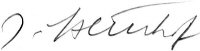 General Johannes Steinhoff Our estimated value of this signature : £80 Died : 1994 | General Johannes Steinhoff By early 1940 Macky Steinhoff was leading 4 / JG-52 during the Battle of Britain. He was then transferred to the eastern front where his success continued. In the final stages of the defence of the Reich he joined JV-44 flying the ME 262 in which he scored 6 victories before being seriously burned in a crash. He flew 939 missions scored 178 victories and was awarded the Knights Cross with Oak leaves and swords. |
|
Contact Details |
|
Sign Up To Our Newsletter!
This website is owned by Cranston Fine Arts. Torwood House, Torwoodhill Road, Rhu, Helensburgh, Scotland, G848LE Contact: Tel: (+44) (0) 1436 820269. Email: cranstonorders -at- outlook.com |
 |


